Reforestation Planning in Hattiesburg, MS
The Right Seedlings, Planted at the Right Time
Reforestation Planning
Post-Harvest Regeneration Plans
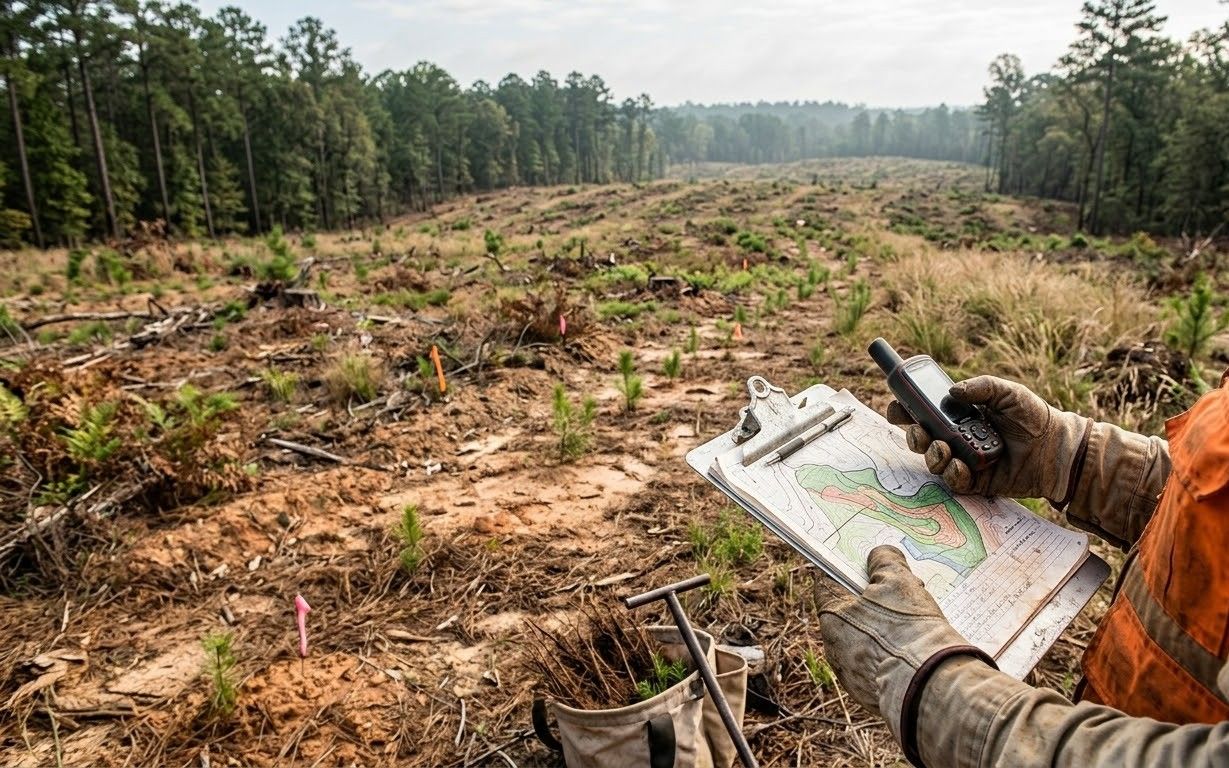
A harvest is the best moment to decide what comes next. We evaluate the cutover, logging debris, soil conditions and competing vegetation, then recommend whether to plant, encourage natural seeding or combine both approaches for the most reliable result.
Species and Seedling Selection
Loblolly, slash and longleaf pine each suit different soils, goals and risks. We match species and seedling type, bareroot or containerized, to your site and objectives, and help you source quality stock from reputable nurseries before supplies run short.
Site Preparation Planning
Competing brush, hardwood sprouts and logging slash can choke young seedlings. We prescribe chemical, mechanical or burning treatments appropriate for the site, timed so the ground is ready and clean when planting crews arrive during the winter dormant season.
Planting Contractor Coordination
We schedule experienced planting crews, specify spacing and seedling density, and inspect the work as it happens. Checking root placement, planting depth and seedling handling in the field prevents the mistakes that quietly cause poor survival months later.
Seedling Survival Checks
After the first growing season, we sample planted areas to count living seedlings per acre. Mississippi State University Extension suggests at least 300 surviving pines per acre, and our checks show early whether replanting or supplemental planting is needed.
Cost-Share Application Support
Mississippi's Forest Resource Development Program can cover up to 75% of eligible practice costs for owners with at least 10 acres. We help prepare the management prescription and paperwork these programs require, so assistance is not lost to missed steps.
Why Choose Us for Reforestation Planning
Why Choose Us for Reforestation Planning
Species Matched to Your Soils
Planting the wrong pine on the wrong site can cost years of growth. We study soil drainage, past stand performance and disease risk across your tract, recommending species that will thrive rather than simply what is easiest to order.
Timing Around the Planting Window
Seedling orders, site preparation and crew schedules all have to line up within a few winter months. We plan backward from the planting window, so treatments are finished and seedlings arrive fresh when conditions are right for them.
Contractors Held to the Prescription
Planting crews work fast, and quality can slip without someone checking behind them. Our field inspections confirm that spacing, depth and seedling handling meet the agreed standards, and any problems are corrected before the planting crew packs up and leaves.
Problems Caught in Year One
Drought, weed competition and insect damage usually show up early in new plantations. Our survival checks identify weak or patchy areas quickly, giving you time to schedule release treatments or replanting before a poorly stocked stand becomes a permanent setback.
Help Navigating Program Paperwork
State and federal cost-share programs have specific forms, deadlines and practice standards. We guide you through each one, prepare the required prescriptions and keep receipts and records organized, so reimbursement requests move smoothly after the approved work is complete.
A Stand Planned From Seedling to Harvest
Reforestation decisions affect every later thinning and harvest. We consider future access, burn units, wildlife openings and market products from the start, giving the new stand a clear path toward the goals you have set for it over the coming decades.
Plant Today With the Next Harvest Already in Mind
Plant Today With the Next Harvest Already in Mind
The stand you plant this winter will likely be harvested by the next generation, so the decisions made now deserve careful thought. Gill Forestry Solutions guides landowners in Hattiesburg, MS and across South Mississippi through each step of reforestation, from choosing species and preparing the site to watching seedlings through their first difficult summer. Because seedling supplies and planting crews book up well before winter, early planning gives you more options and fewer compromises. If you have recently harvested or want to convert open land into productive forest, start the conversation on our contact page, and together we will map out the new stand.
FAQs - Frequently Asked Questions
How many seedlings should be planted per acre?
Current southern pine plantings often use roughly 450 to 550 seedlings per acre, though objectives can shift that number. Wider spacing can favor wildlife habitat, while denser plantings offer more early thinning volume and close the canopy sooner.
Should I plant longleaf, loblolly or slash pine?
Loblolly grows quickly on many upland sites, slash suits wetter flatwoods soils, and longleaf tolerates fire, drought and storms well while supporting excellent wildlife habitat. Gill Forestry Solutions matches species to each Hattiesburg, MS area site and landowner goal.
What is site preparation, and is it always needed?
Site preparation clears competing vegetation and debris so seedlings can establish. Some cutovers need little work, while sites with heavy brush or hardwood sprouts may require herbicides, burning or mechanical treatment to give young pines a fair chance.
Is natural regeneration an option instead of planting?
Sometimes. Leaving well-spaced seed trees or relying on nearby seed sources can regenerate pine with less upfront spending, but results depend on seed crops, timing and site preparation. Planting usually offers more predictable stocking, improved genetics and even spacing.
Are containerized seedlings better than bareroot?
Containerized seedlings tend to survive better and allow a longer planting window, which matters especially for longleaf pine. Bareroot seedlings are widely used for loblolly and slash, and when handled carefully, they perform well on properly prepared sites.
How soon after a harvest should land be replanted?
Ideally during the first planting season after harvest, once any needed site preparation is finished. Waiting longer lets brush and hardwood sprouts take over, which raises site preparation needs and can slow the new stand's early growth considerably.
Can old pasture or farmland be converted to forest?
Yes. Open fields can be planted in pine or hardwoods, though compacted soils may need subsoiling and grass competition usually requires herbicide control. Gill Forestry Solutions plans field conversions for landowners around Hattiesburg, MS, matching species to each field's soils.
What hurts seedling survival most?
Poor handling before planting, shallow or J-rooted placement, drought in the first summer and heavy weed competition cause most losses. Careful storage, quality planting and timely release treatments solve the majority of these problems before they cost a stand.